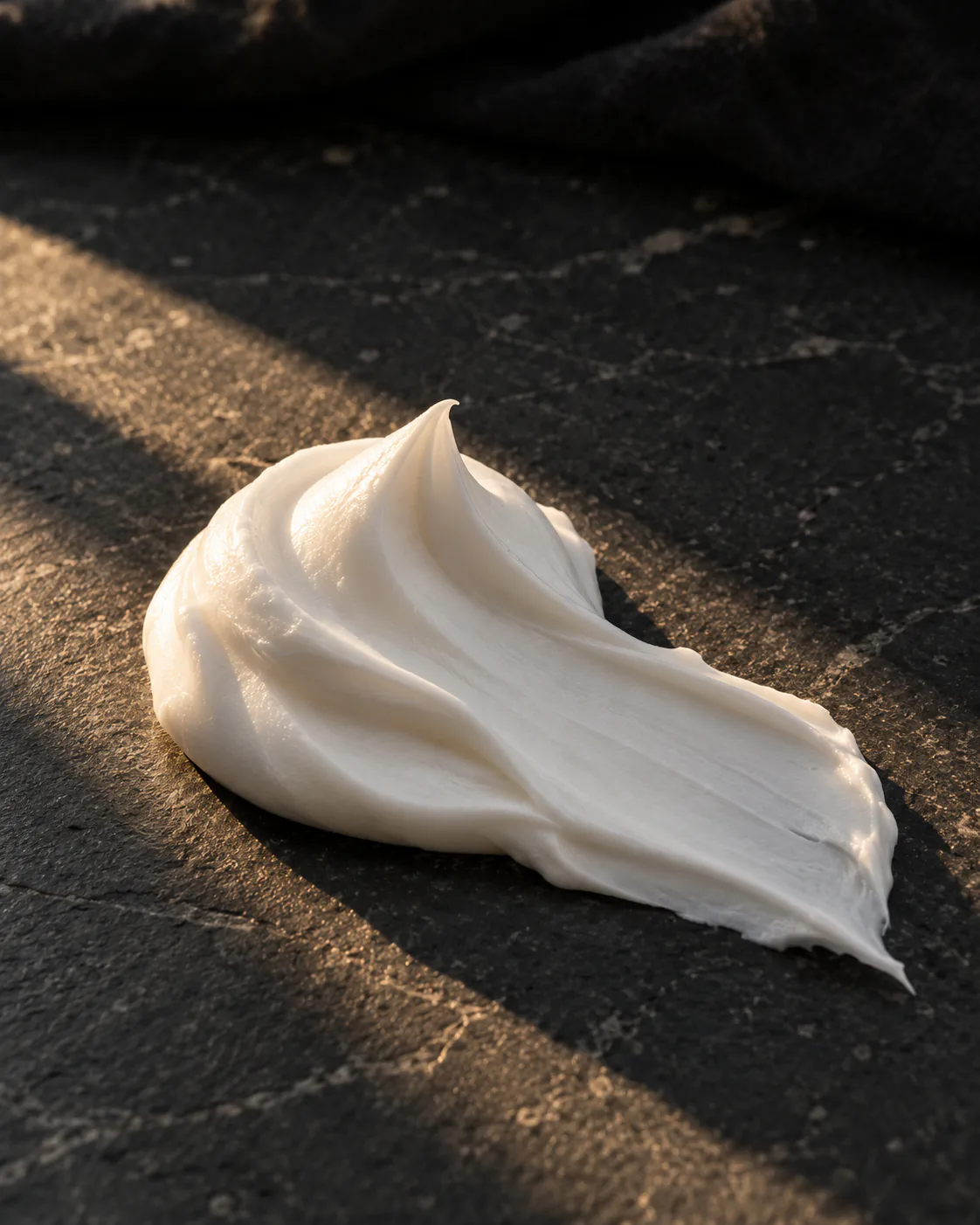
Urea, explained in one cup of tea
What urea is, why our Body Cream holds 5% of it, and who it’s for, in the time it takes the kettle to boil and the tea to go cold.
Put the kettle on. By the time it clicks off, you’ll know what urea is. By the time the tea has gone cold on the side, which it will, you’ll know why our Body Cream holds 5% of it, and whether it’s for you.
The kettle: what urea is
Urea is one of the small molecules your skin makes to stay supple. Together with a handful of others, such as amino acids and sodium PCA, it forms what dermatologists call the natural moisturising factor: a built-in sponge in the outer layer of skin that holds on to water.
Skin that is dry and rough tends to have less of it. Elbows, knees, heels and shins are the usual suspects: they get leaned on, rubbed and forgotten, and the outer layer thickens to cope. Put some urea back and two things happen. The skin holds more water, and the thickened patches soften and loosen, so they feel smooth again instead of catching.
The first sip: why hydroxyethyl
Classic urea creams have worked for decades, but at higher strengths they can feel tacky and sting on cracked skin, which is why so many end up half used at the back of the cabinet. Hydroxyethyl urea is a gentler cousin. It holds water in much the same way, with a lighter feel, so the Body Cream sinks in instead of sitting on top.
It is made in a laboratory from urea, so every batch is the same. No animals are involved, whatever the word suggests.
Halfway down: why 5%
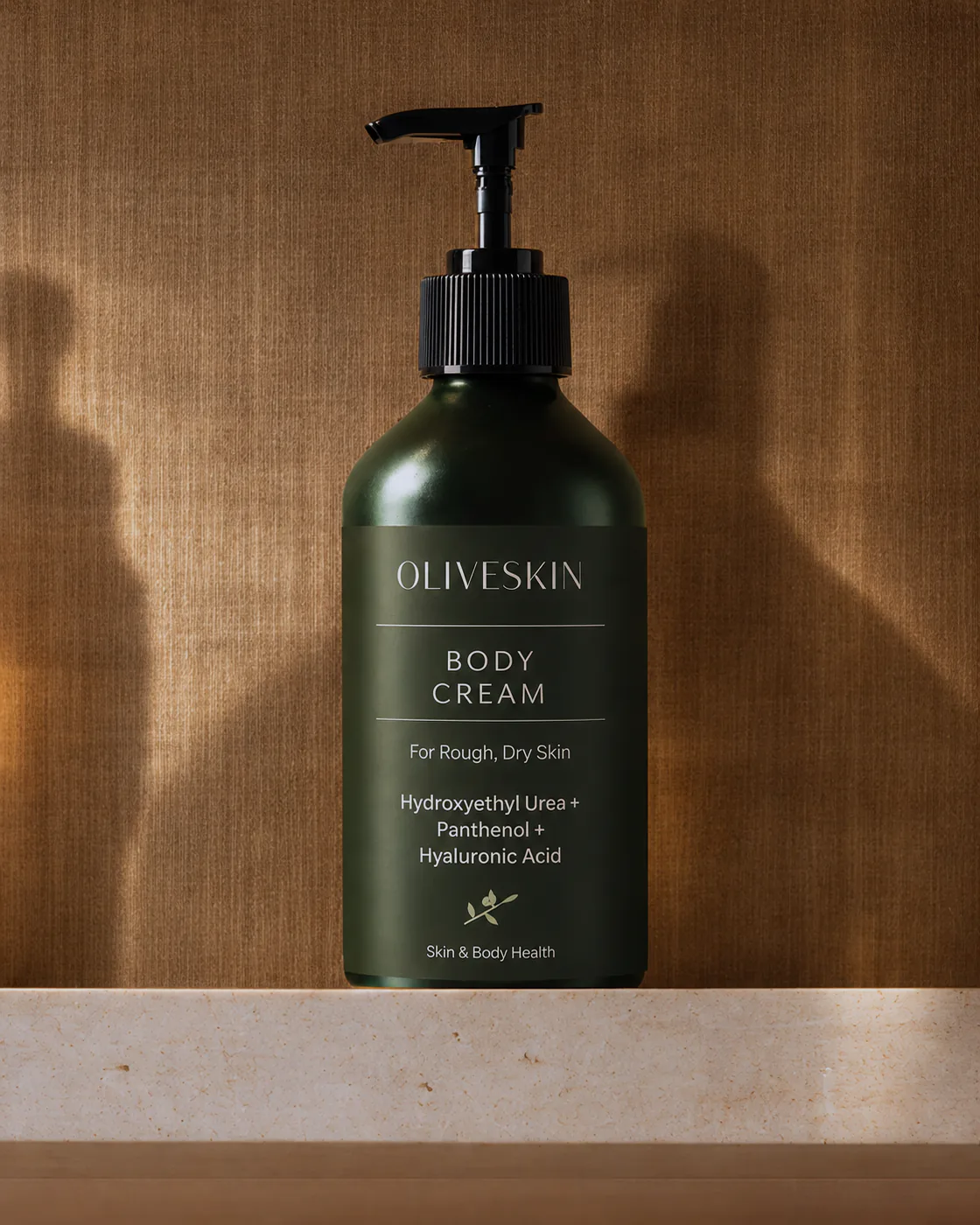
Five per cent is enough to make a difference you can feel on rough patches within a week or two, and gentle enough to use all over, every day. In a consumer study of 52 people over four weeks, 95% said their rough patches felt smoother after seven days, and 98% said the cream never felt greasy.
Beside it in the same cream: 2% panthenol, the pro-vitamin form of B5, which calms and comforts dry skin, and hyaluronic acid to help keep the moisture in. Cucumber, lemon and thyme keep the whole thing smelling fresh rather than clinical.
Your skin already makes urea. The Body Cream puts back what rough skin is short of.
Going cold: who it’s for
Anyone with patches that feel rough, dry or tight: elbows that catch on a jumper, shins that turn white and flaky by February, heels that sound like sandpaper on the sheets. It suits every skin type and every skin tone. Most people keep it for where they need it most, but it is pleasant enough to use everywhere.
How to use it
Every day, after washing
A pump on each rough area, massaged in until it disappears. It feels rich on the fingers and light on the skin, so you can dress straight after.
Body CreamWhere it’s roughest, again at night
Heels and shins can take a second layer before bed. Elbows usually soften first; heels have the thickest skin on the body and take their time.
Body CreamSundays, the Scrub first
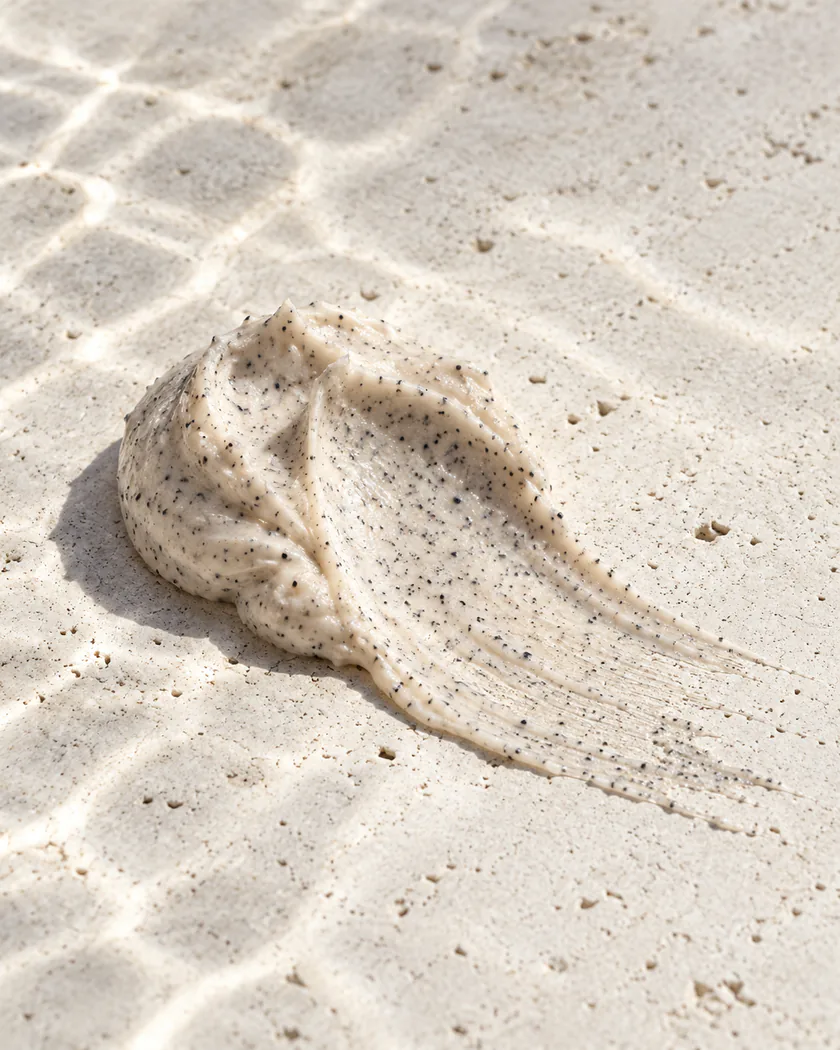
Once or twice a week, buff the rough patches in the shower with the Face & Body Scrub. With the dry flakes gone, the urea reaches skin that can use it.
Face & Body Scrub
And that’s urea. The tea, as promised, is cold. Put the kettle on again; this time you can drink it.
Give it two weeks of every day. Rough skin took a while to build up, and it softens at about the same pace.
From this story
The two in this story
A sample with every order, free UK delivery over £45, and sixty days to change your mind, even opened.
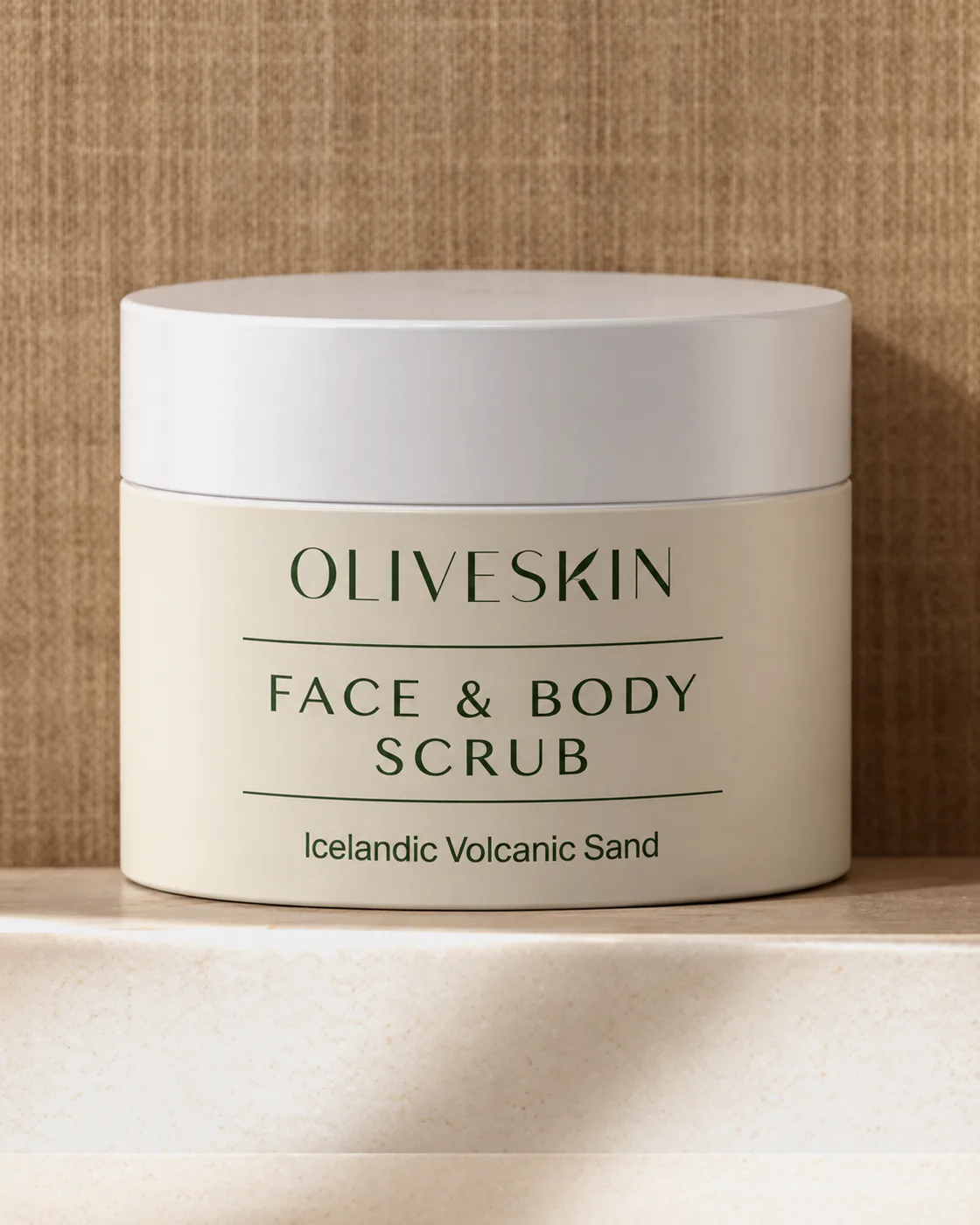
Face & Body ScrubWas US$38, now US$27
Icelandic Volcanic Sand · 170 ml
Buffs, refines, softens
4.6(978)