

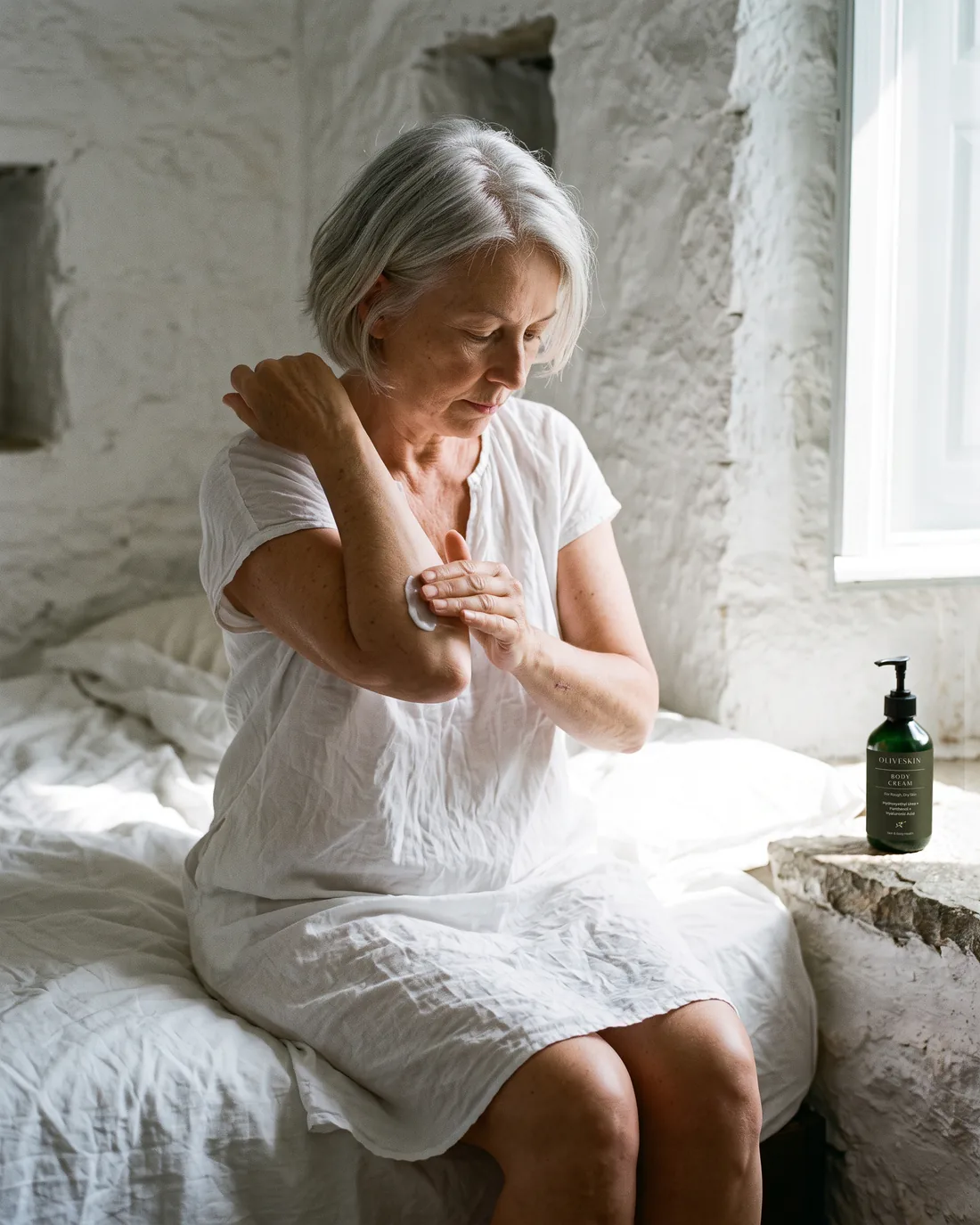
Named after a skin tone
Where the name comes from, why an olive undertone shows up in light, medium and deep skin, and why we call it a tone, not a target.
People tell us what they thought the name meant. A range made with olive oil, mostly. A promise of a Mediterranean tan, now and then. Both are fair guesses, and both are wrong. OLIVESKIN is named after a phrase people use about skin, and this is where it comes from.
A phrase, not a product
“Olive skin” is everyday language, not a medical term. People use it for skin with a soft green or golden warmth, the kind that looks warm in one light and faintly green in another. You hear it at a make-up counter, in a novel, from a friend describing her grandmother. It has never belonged to one country, or to one colour of skin.
We borrowed it because people use it, and because it describes the thing we care about most: how skin looks in good light. Not how it ought to look.
Depth and undertone
Skin colour has two parts that vary on their own. The depth runs from lighter to deeper. The undertone is the hue beneath it: cooler and pinker, warmer and more golden, or the muted green-gold people call olive.
Three things make the mix. Melanin adds brown. Blood near the surface adds red. Carotenoids, from the food you eat, add yellow. Where they balance in a particular way, an olive undertone appears, and it can sit under very light skin, medium skin and deep skin alike. That is why one word belongs to so many different people.
A tone, not a target.
Why we say it that way
A name like ours could easily turn into an instruction, so we made it a promise instead: nothing we make is meant to change the colour of your skin, in either direction. What it is meant to do is make skin feel good, and look like itself on a good day. Skin shifts with age, season and sun anyway. That is normal, and it is not a problem to fix.
Not in the bottle
One more thing the name isn’t: an ingredient. No olive appears by name on any of our nine labels. The sprig on the front is our mark, drawn once and kept, not a hint about what’s inside. The only olive anywhere near the cabinet is the shadow of a branch across its doors in the morning. We liked it too much to move the cabinet.
Made for all of them
So the name is a tone, and the range is for every skin: light, medium and deep, face and body, at any age. The pictures on Our name show it through one day of light, in one house, with nothing changed. Look closely and the olive warmth turns up more often than you’d think, on very different faces. It is never the point. Good light is.
The skin tone scale on Our name is the Monk Skin Tone Scale by Dr Ellis Monk: ten depths, from lighter to deeper. An olive undertone can sit under many of them.
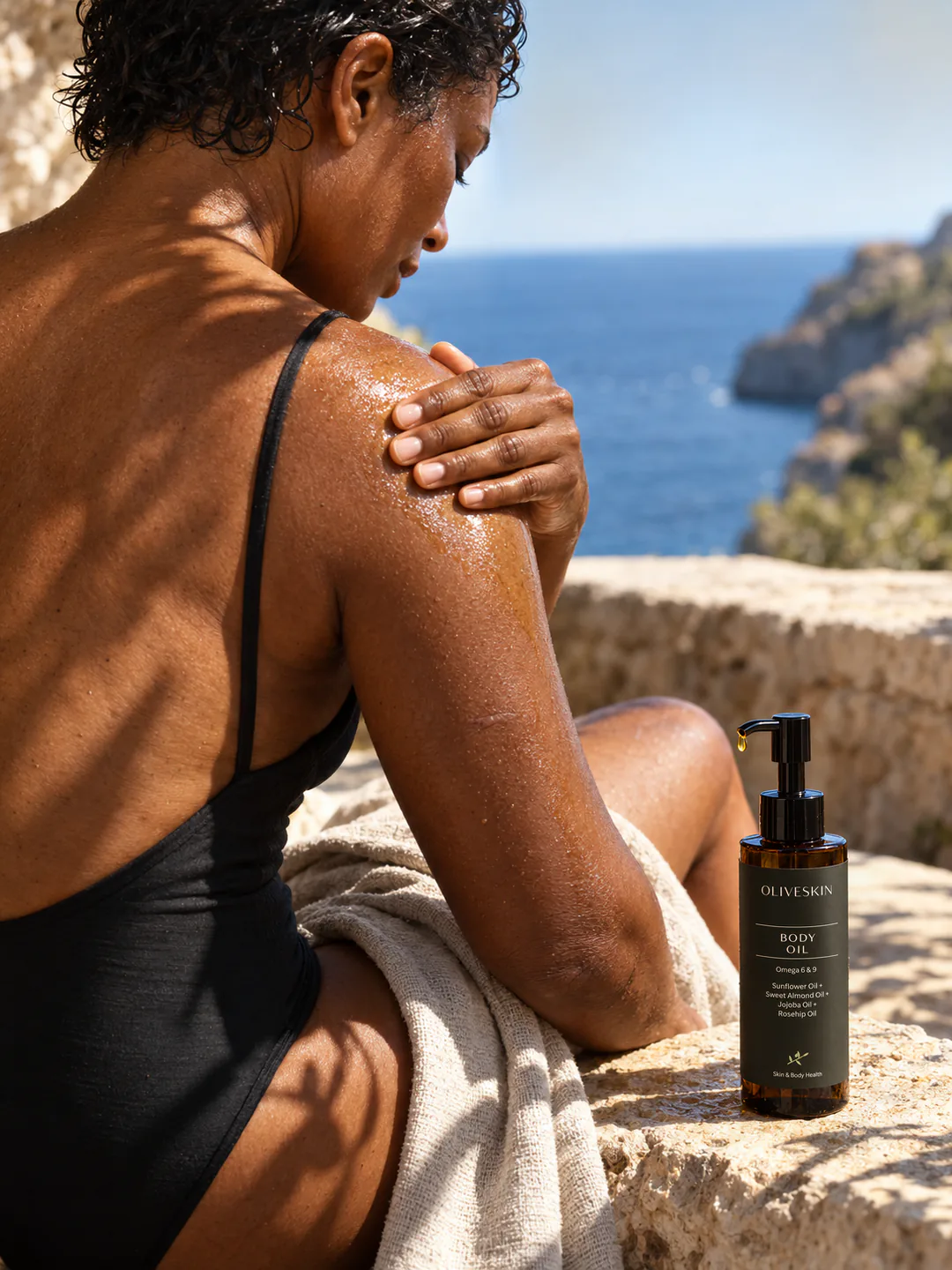
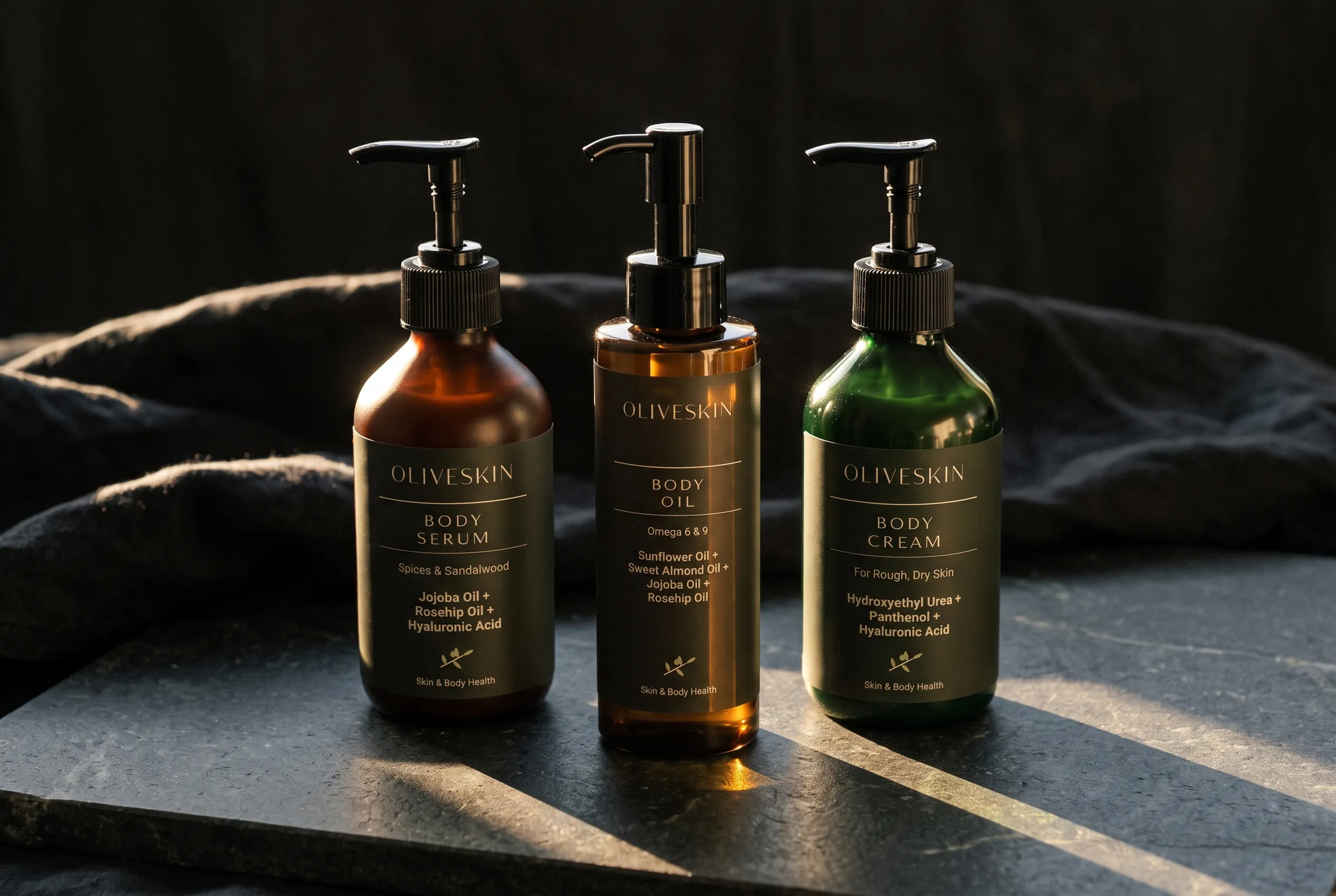
People in these pictures are generated placeholders.